Three of the four seats in that car are empty
The average long-distance car carries fewer than two people. That gap between one and five is where an entire market model was built.
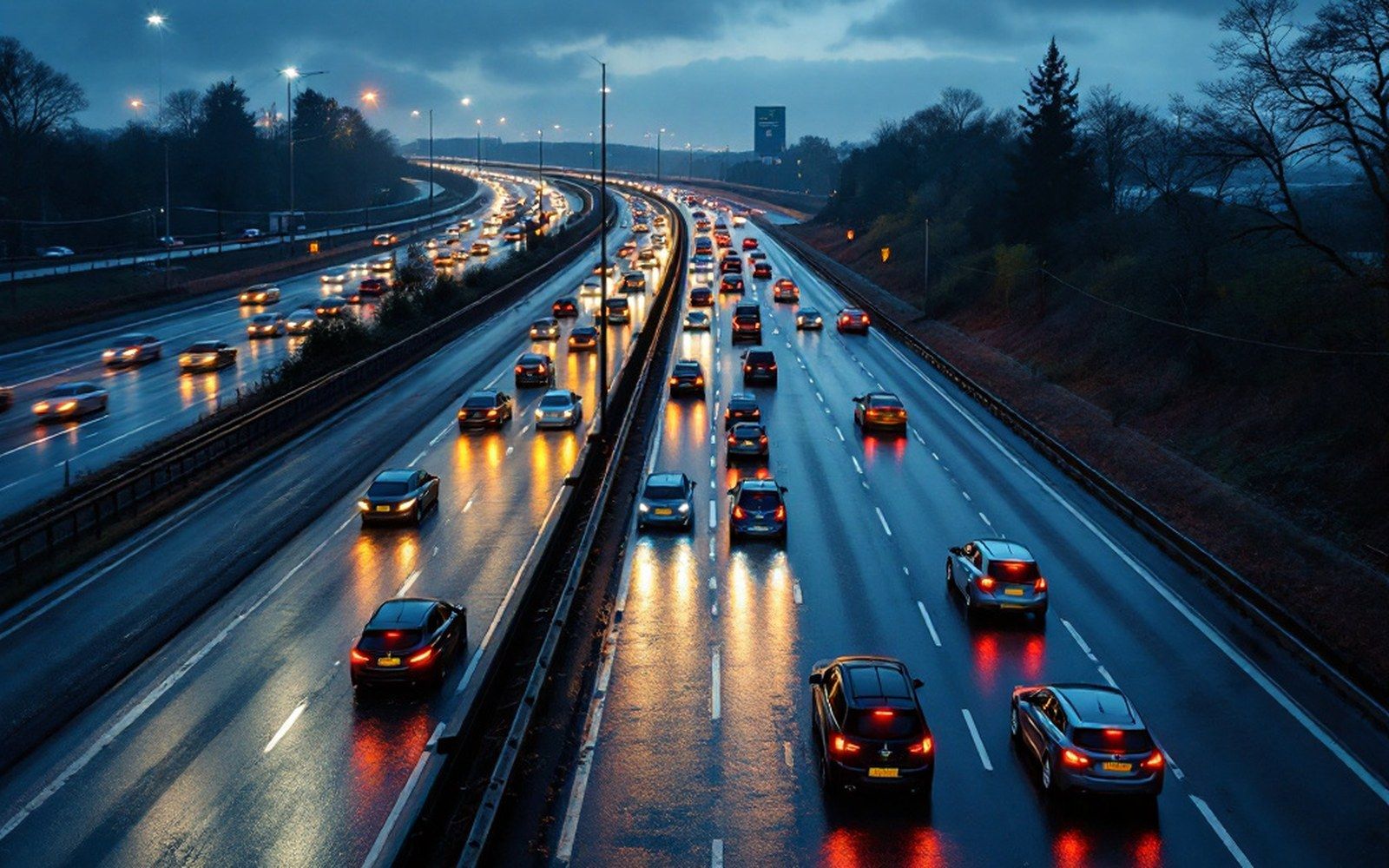
Most of the cars on this stretch are carrying one person, and every one of them is the supply side of the market.
Photograph from the tripda.com picture kitThe arithmetic of the empty seat
A standard five-seat passenger car travelling between two cities at typical occupancy is, by most measures, a spectacular waste. European transport surveys have consistently found that average vehicle occupancy on long-distance journeys hovers around 1.5 persons — which means, on a five-seat car, roughly three and a half seats are going somewhere for free. The driver is going anyway. The fuel is burning regardless. The tolls are paid. The only question is whether anyone else is sitting in the car while all of that happens.
This is the supply side of intercity carpooling, and it is enormous, automatic, and self-replenishing. Every day, drivers make long trips for personal or professional reasons, and the physics of the situation means those trips generate surplus capacity as a by-product. The platform does not need to recruit supply the way a taxi service recruits drivers or a bus company schedules coaches. Supply exists before the platform does. The platform's job is to find it, aggregate it, and make it legible to people who want a seat.
That distinction matters enormously when thinking about why intercity carpooling looked, in the early 2010s, like a category with genuine structural momentum. The marginal cost of adding a passenger to a journey already being made is close to zero — a small increase in fuel consumption, perhaps slightly more wear on the vehicle, but nothing approaching the cost of running a separate trip. The driver recoups something; the passenger pays less than a train ticket; the seats that were going empty stop going empty. Modelled cleanly, it is one of the more elegant resource-allocation problems in surface transport.

Two in the front, three places behind them. The occupancy average, seen from the seat that is being counted.
Photograph from the tripda.com picture kitWhat a seat is worth, and to whom
The pricing arithmetic worked from a simple premise: the driver's costs are fixed or near-fixed regardless of occupancy, so any contribution from a passenger toward fuel and tolls is a net gain. The principle was called cost-sharing rather than fare-setting, and the distinction was not merely semantic. Charging a fare implies running a transport service, which attracts licensing requirements, insurance obligations, and regulatory scrutiny in most jurisdictions. Charging a passenger's share of costs actually being incurred is a different transaction — closer to splitting a dinner bill than selling a ticket. The legal architecture of the whole model rested on keeping that line clear.
From the passenger side, the arithmetic was equally direct. On a corridor where a train ticket costs, say, forty euros, a shared-car seat priced at fifteen to twenty euros is a meaningful saving — not marginal, but the kind of number that changes whether a trip happens at all, particularly for students, for people visiting family across a border, or for anyone whose budget makes rail travel a considered expense rather than an assumption. The relevant comparison was never the car versus the train in the abstract; it was the cost of this seat versus the cost of that ticket on this specific day on this specific corridor.
Platforms like BlaBlaCar, which grew steadily in France through the late 2000s before expanding into Germany, Brazil, and beyond, built their pricing interfaces around exactly this calculation. Drivers entered their route; the platform suggested a per-seat price derived from fuel cost, distance, and toll estimates; drivers could adjust within a range. The ceiling existed partly to maintain the cost-sharing framing and partly to prevent the kind of price gouging that would have made the model indistinguishable from unlicensed private hire.
The gap between supply and a working market
The occupancy figure — that 1.5-person average — is seductive because it implies the supply is everywhere. In practice, supply that cannot be found, matched, and trusted on a specific corridor on a specific date is not supply in any useful sense. The density problem is the first and most persistent structural constraint: a marketplace needs drivers going from A to B on a given afternoon, not drivers going from A to B in aggregate across all afternoons. Thinly populated corridors, or corridors where trip frequency is low, can sit in a state of nominal abundance and functional emptiness simultaneously.
Germany illustrated this sharply after 2013, when the country liberalised its long-distance coach market, ending decades of restrictions that had protected Deutsche Bahn from road competition. Within a couple of years, operators including FlixBus had built dense, frequent, and extremely cheap coach networks on the major corridors. The shared car's pricing advantage — the thing that made the empty seat interesting to a passenger in the first place — compressed significantly. On routes where a coach seat could be had for nine or twelve euros, the shared car was no longer cheap; it was merely cheaper than the train, and not always by enough to compensate for the inconvenience of coordinating with a stranger.
Brazil presented a different geometry of the same problem. Long distances, thin rail coverage, and a large population of people making intercity trips by bus created demand conditions that looked promising. But household car ownership rates and the distribution of drivers willing to register on a platform both shaped what supply actually looked like in practice. The 1.5-person occupancy statistic is a national or continental average; it flattens enormous variation between corridors, income groups, and trip purposes.
The trust layer and the reputation system
None of the arithmetic functions without a mechanism for making the transaction credible. An empty seat is not an asset until a stranger is willing to sit in it, and that requires some account of who the driver is, whether they will actually show up, and whether the trip will resemble what was advertised. The solution — assembled iteratively by BlaBlaCar and adopted in various forms by platforms launched under Rocket Internet's model, including Tripda across Latin America and Southeast Asia — was a reputation system built on verified identity, post-trip ratings, and stated preferences.
The mechanics were straightforward: drivers and passengers rated each other after each journey, and those ratings accumulated into a profile that subsequent users could inspect before booking. Verified phone numbers, profile photographs, and response-rate indicators added further signal. The profile became a kind of informal credential — not a guarantee, but enough information to make a decision. The rating system carried real information on high-frequency corridors where the same driver made the same trip repeatedly; it carried less on journeys taken once or twice a year, which is most of them.
What the arithmetic of the empty seat could never resolve on its own was this trust deficit. Three and a half empty seats per car is a supply figure, not a market figure. Converting latent capacity into actual bookings required convincing both parties that the transaction was worth the coordination cost, the uncertainty, and the social effort of sharing a car with someone they had not previously met. The mechanism that did that work — the profile, the rating, the verified identity, the stated preference — was as much a product of the platform as the matching algorithm. Remove it, and the empty seat stays empty, regardless of what the occupancy statistics say the opportunity should be.
The whole legal argument sits on this dashboard: a cost already incurred, divided, not a fare charged.
Photograph from the tripda.com picture kitAverage occupancy on a long-distance car journey is close to one and a half people, which is the entire supply side of the category and the reason it looked easy.
Liquidity is not how many drivers exist. It is how many are going this way, this evening, from here.
Photograph from the tripda.com picture kit