Germany deregulated its coaches, and the cheap seat stopped being scarce
The 2013 liberalisation of long-distance coach services created an alternative at a price the carpool had assumed it owned.
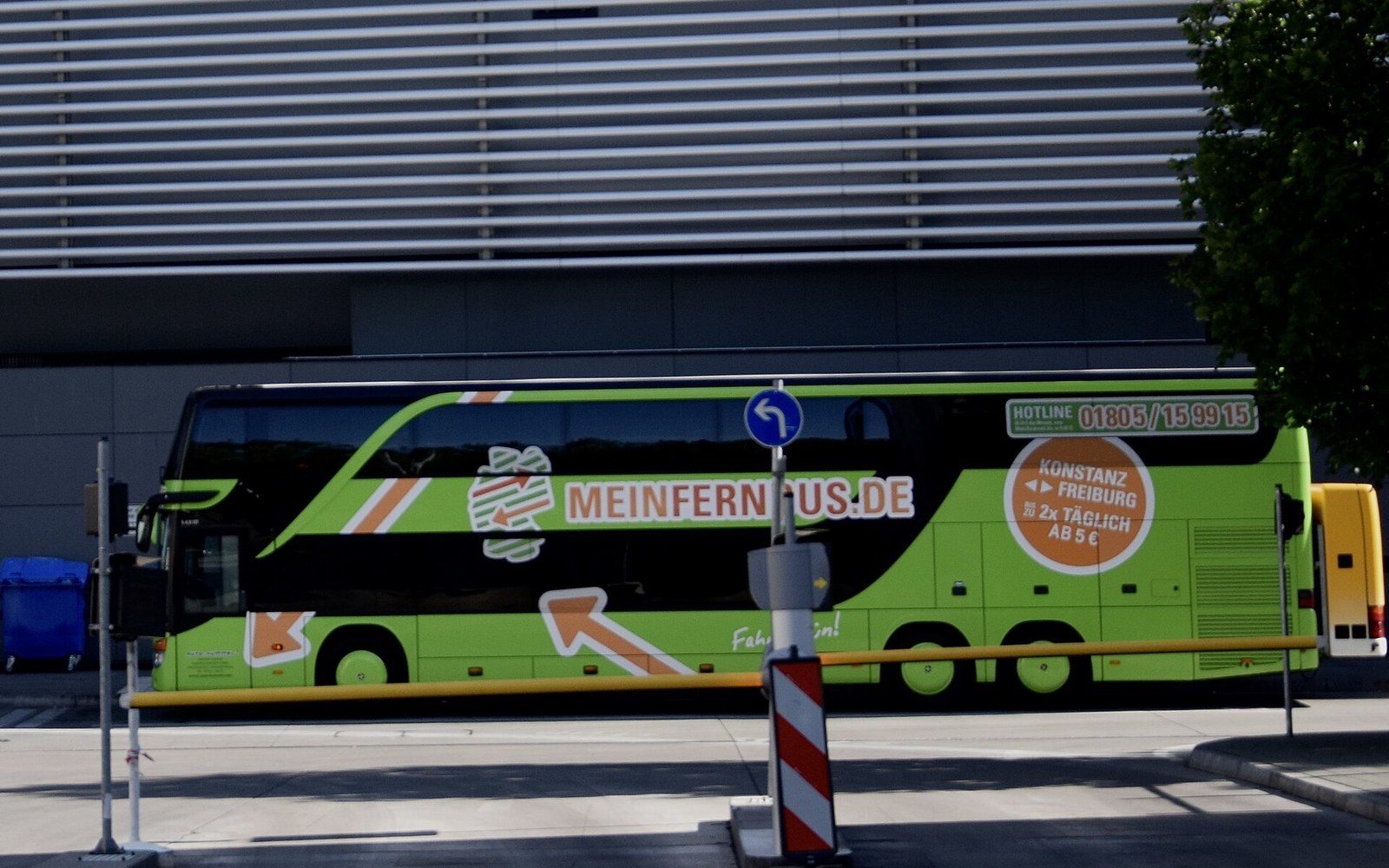
The competitor the law had excluded since 1961, in service on a corridor the carpool assumed it owned.
Photograph: Setra S 431 DT intercity coach, Munich central bus station · Wikimedia CommonsThe wall that came down
For decades, Germany's long-distance passenger market was, by design, a near-monopoly. The Fernbusmarkt — the intercity coach market — was legally suppressed under the Personenbeförderungsgesetz, the passenger transport law that dated in its modern form to 1961. The statute protected Deutsche Bahn and, behind it, the principle that rail should remain the spine of long-distance travel. Private coach operators could run international routes, or routes to cities without a rail connection, but a direct commercial bus from Hamburg to Munich? Prohibited. The law treated such a service as unfair competition with a nationalised carrier that had to maintain infrastructure regardless of demand.
That changed on 1 January 2013. An amendment to the Personenbeförderungsgesetz removed the prohibition, and the intercity coach market opened almost overnight. Within eighteen months, more than 200 routes were in operation, served by carriers including FlixBus, MeinFernbus, Postbus, ADAC Postbus, and half a dozen regional entrants. FlixBus and MeinFernbus merged in 2015 to form the dominant network that would eventually expand across Europe. Fares in the initial competitive phase were sometimes below five euros on popular corridors. The introductory pricing was partly promotional, but even once the market consolidated, tickets from Berlin to Frankfurt were regularly available at ten to fifteen euros — bought online, confirmed immediately, on a departure schedule that ran multiple times a day.
This mattered enormously for intercity carpooling, because the price point carpooling had occupied was not some accidental gap in the market. It was a structural consequence of the coach prohibition. Carpooling in Germany — and BlaBlaCar, which had a significant German operation, is the clearest example — had grown precisely because cheap, direct intercity travel by anything other than a private car was genuinely difficult to obtain at a consumer price. The economics that justified a stranger taking a seat in someone else's Volkswagen were built on a counterfactual: the alternative was expensive rail, or nothing.
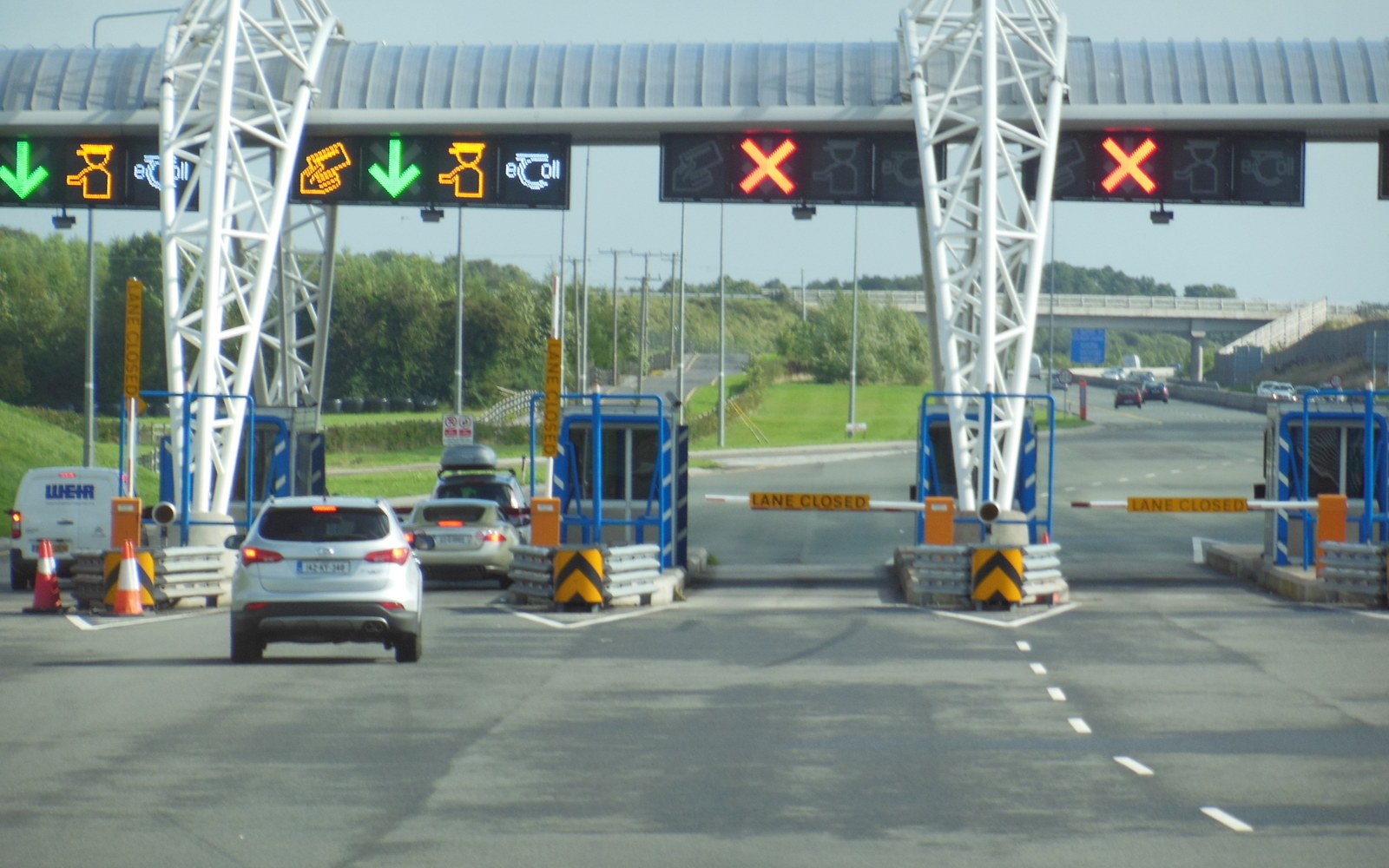
Tolls are one of the two costs a cost-sharing price may recover. The other is fuel. Nothing else counts.
Photograph: Toll Plaza on the M7 · Wikimedia CommonsThe arithmetic of the changed landscape
To understand how sharply the 2013 liberalisation altered the competitive position of carpooling, you need to run the numbers that a potential passenger was actually comparing.
A standard Deutsche Bahn second-class fare between Frankfurt and Berlin — around 550 kilometres — without a rail card or advance booking was, in the years before 2013, regularly above eighty euros. Saver fares existed but required flexibility and advance purchase, and they were neither guaranteed nor always available. The carpool alternative, priced on a cost-sharing basis of fuel plus tolls divided by passengers, came out at roughly fifteen to twenty-five euros depending on the car and the number of passengers. That gap — sixty euros or more — was the engine of the carpooling market. It explained why a passenger would tolerate departure uncertainty, a pickup point negotiated by text message, and a four-hour journey in the back seat of a stranger's estate car.
After January 2013, a FlixBus or MeinFernbus ticket on the same corridor cost, in practice, ten to fifteen euros at almost any reasonable booking horizon. The carpool had not become more expensive. The coach had become cheaper than the carpool — cheaper in money, more convenient in infrastructure (central bus terminals, fixed departure times), and requiring no social transaction whatsoever. The passenger did not need to coordinate, negotiate a pickup, or sustain four hours of conversation about where they were from. They simply bought a ticket.
The occupancy rate on any given carpool journey depended on a driver who had to travel anyway deciding to fill empty seats. That mechanism is real and continues to generate trips. But the margin that made those empty seats attractive to a passenger evaporated when the floor price of the alternative dropped below the cost-sharing calculation. A driver splitting a 60-euro fuel and toll bill across three passengers can offer seats at twenty euros; a coach at twelve euros beats that without trying. The density problem in carpooling — getting enough drivers and passengers to match on a given corridor on a given afternoon — becomes nearly insoluble when the passenger is not actually price-constrained to use the platform.
What carpooling still had
None of this meant carpooling became worthless. The mechanism retained several genuine advantages that the coach could not replicate, and it is worth being precise about what they were, because the popular postmortem narrative — that coaches simply killed carpooling in Germany — is too blunt.
First, door-to-door convenience. A coach runs between terminals; a carpool can, in principle, depart from a residential neighbourhood and arrive within walking distance of a destination. For smaller cities and towns without a FlixBus stop, this remained meaningful. Second, timing flexibility. A driver who is travelling on a Saturday morning regardless of passenger demand gives the passenger a departure window that the fixed coach schedule may not. Third, price on longer or lower-density corridors. FlixBus and its competitors prioritised high-volume routes; on a corridor between two medium-sized cities without a direct coach, the carpool arithmetic could still produce the cheapest available seat.
But these were edge cases within a market that had been redefined. The corridors where carpooling had flourished — Berlin to Hamburg, Frankfurt to Munich, Frankfurt to Cologne — were precisely the corridors where FlixBus built its densest network. The structural accident that had made the cheap intercity seat scarce was corrected by legislation, and carpooling lost its most straightforward value proposition in Germany's most lucrative markets.
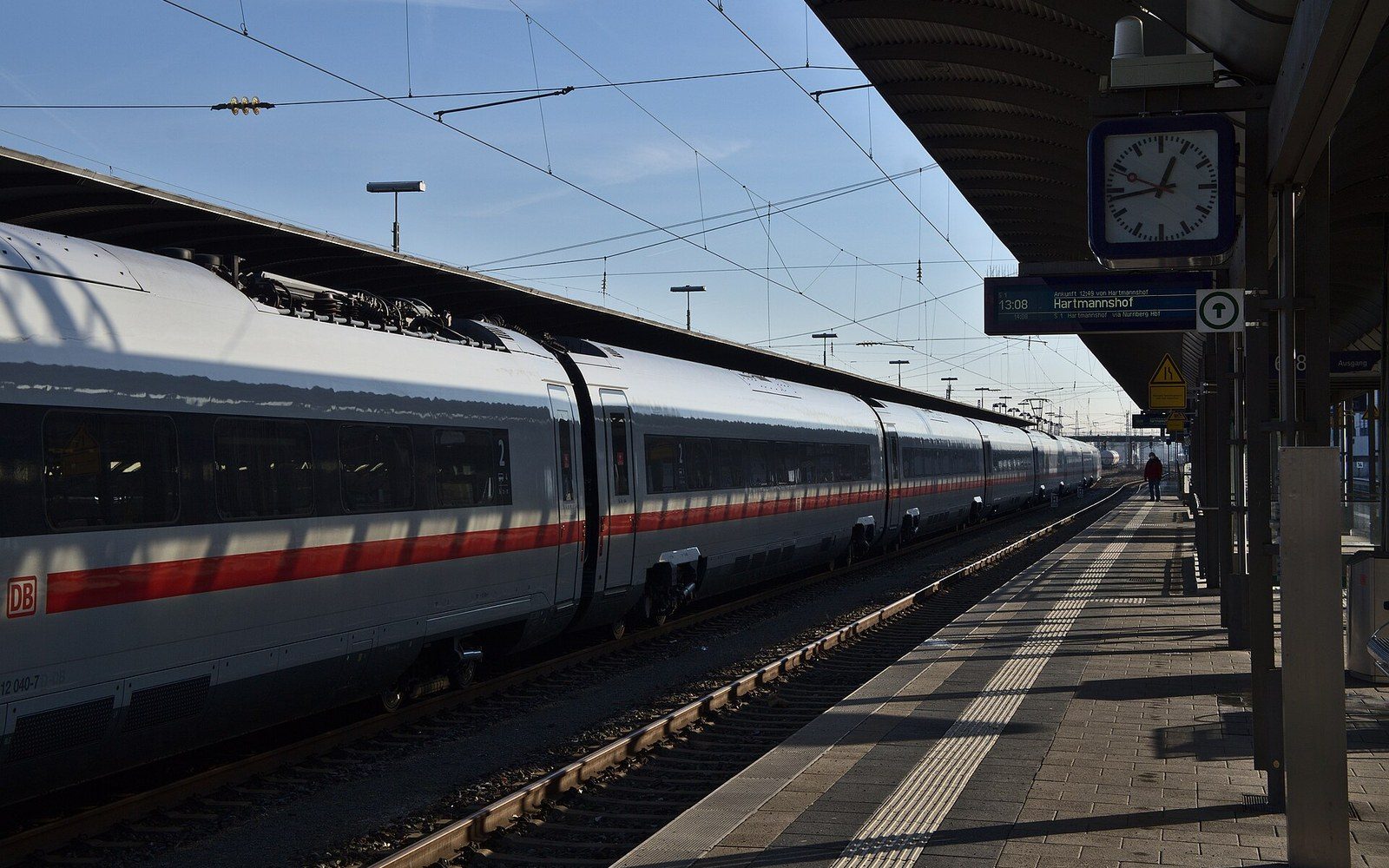
Where this leaves every hour, the shared car is competing on price alone, and on price alone it is fragile.
Photograph: A platform at Bamberg station with a high-speed train · Wikimedia CommonsThis is why the German experience is analytically important for anyone trying to understand intercity carpooling as a model. It demonstrates that the market for a shared seat is not, by itself, durable. It is durable only as long as the regulatory or infrastructure environment that created the price gap remains in place. In France, BlaBlaCar's home market, the coach sector was substantially liberalised in 2015 under the Macron Law, replicating the German dynamic two years later. In Brazil — another market where Rocket Internet-backed carpooling operations launched — the coach sector was already mature, fares were competitive on major corridors, and the available price advantage for carpooling was correspondingly narrower from the start.
The lesson the German Fernbus liberalisation teaches is precise: the cheap seat was never really owned by carpooling. It was squatted, in the best sense, in space that regulation had left empty. Once the regulation changed, the train already wins on speed and the coach wins on price, and the carpool is competing for a narrower slice of the market — the irregular corridor, the early departure, the passenger who values the front seat over the aisle. That is a real market. It is just a different one, and considerably smaller than the one carpooling had grown up believing it served.
The 2013 liberalisation of long-distance coach services created an alternative at a price the carpool had assumed it owned.
Household ownership decides how many drivers could exist, long before any app is written.
Photograph from the tripda.com picture kit