Where the Train Already Wins
On corridors with frequent, fast rail, the shared car competes on price alone — and on price alone, the model is fragile.
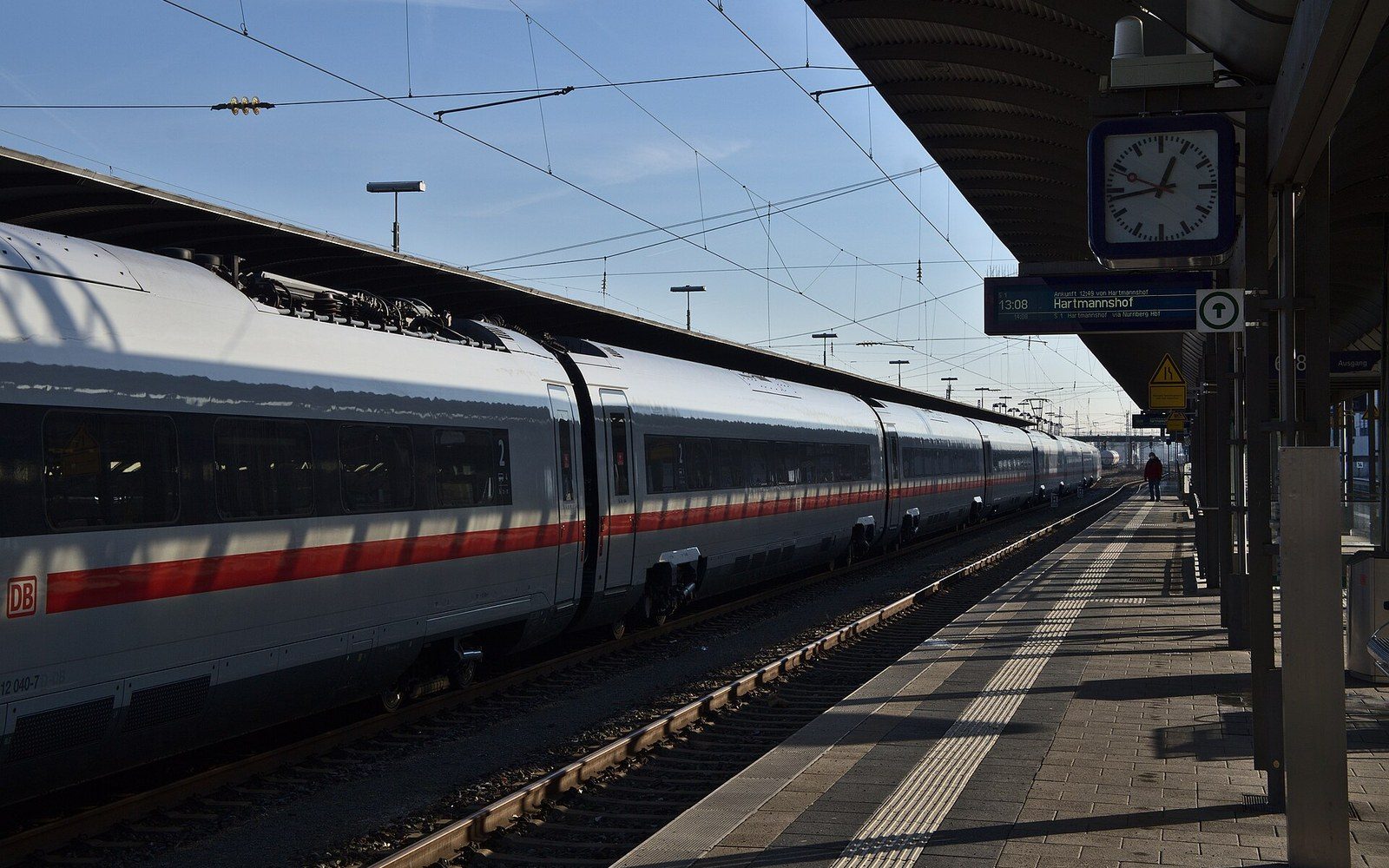
Where this leaves every hour, the shared car is competing on price alone, and on price alone it is fragile.
Photograph: A platform at Bamberg station with a high-speed train · Wikimedia CommonsThe arithmetic of the wrong fight
A carpooling seat between Paris and Lyon costs a driver approximately what the fuel and toll split works out to across four passengers: call it €15–20 depending on the car and the pump. A TGV booked a few weeks ahead on the same corridor sits around the same number, sometimes lower during promotions. The intercity bus — FlixBus, Ouibus, whatever brand holds the route that season — often undercuts both. The shared car is not cheap in any absolute sense; it is cheap relative to the full train fare, and that relativity is doing a lot of heavy lifting on corridors where rail infrastructure is already excellent.
This is the structural trap. BlaBlaCar built its core business in France, and France has one of the densest high-speed rail networks in Europe, which means the company grew large despite competing against fast, frequent, comfortable trains rather than because the trains were absent. The shared car won on price, on door-to-door convenience for trips that cross the last mile badly, and on the social texture of the journey for passengers who preferred it. When any one of those advantages narrows, the competitive case narrows with it.
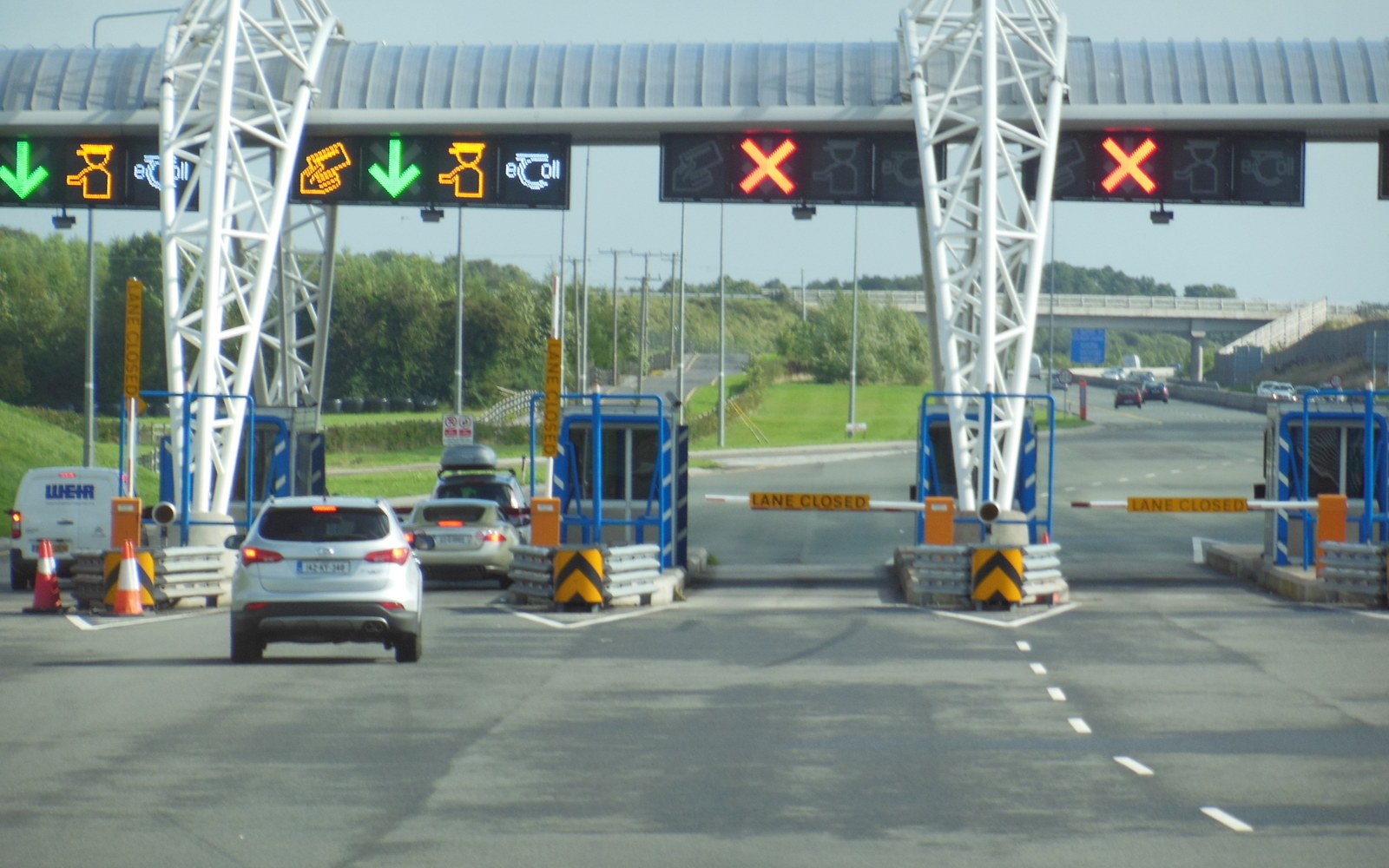
Tolls are one of the two costs a cost-sharing price may recover. The other is fuel. Nothing else counts.
Photograph: Toll Plaza on the M7 · Wikimedia CommonsWhat fast rail actually costs the model
A Paris–Lyon TGV takes about two hours. A shared car on the same corridor takes roughly four, depending on pickups. The driver offering seats is not selling equivalent travel; they are selling a price discount in exchange for time. That trade is real, and many passengers take it — but it is sensitive. When rail pricing drops, even temporarily, the price gap that justifies two extra hours in a car closes fast.
The sensitivity is sharpest at the high-volume end of the market. Frequent travellers — students commuting between cities, workers on regular routes — are exactly the passengers a carpooling platform needs to anchor liquidity on a corridor. They are also the passengers most likely to hold rail season passes or to book well ahead at discount fares. The cheap seat competes hardest for the traveller who didn't plan, and planning is precisely what the rail operators have learned to reward.
Germany's experience makes the mechanism visible in another register. When Germany deregulated its long-distance coach network in 2013, it did not just add buses; it repriced the bottom of the intercity market. The coach at €9 and the shared car at €12 are no longer in different categories — they are the same decision, made on a phone screen, and the bus has a published schedule, a departure point, and no dependency on whether a driver happens to be going your way that afternoon.
The corridor as a diagnostic
Not every route is a Paris–Lyon. On corridors where rail is slow, infrequent, or requires an awkward change, the shared car is not competing on price alone — it is competing on existence. A direct car journey between two mid-sized cities with no direct rail link offers something the ticket office cannot sell at any price. This is where the model's economics are genuinely strong: the driver is covering a journey they were making anyway, the passenger gets a connection that otherwise requires a detour or a car of their own, and the three empty seats that would otherwise have rolled empty generate revenue that nearly covers the fuel.
The diagnostic question for any corridor is therefore: what is the passenger's realistic alternative? If the answer is a two-hour TGV for €25, the carpooling seat is competing on a margin measured in euros and minutes, and the margin can disappear in a pricing campaign. If the answer is a three-hour journey with a change and a forty-minute wait in a provincial station, the shared car is not the cheap option — it is the good one.
Fast rail is not a reason carpooling fails. It is a reason carpooling must be precise about where it competes. The corridors that already work for trains are the corridors where a seat in a stranger's car needs the strongest version of every other argument it has.
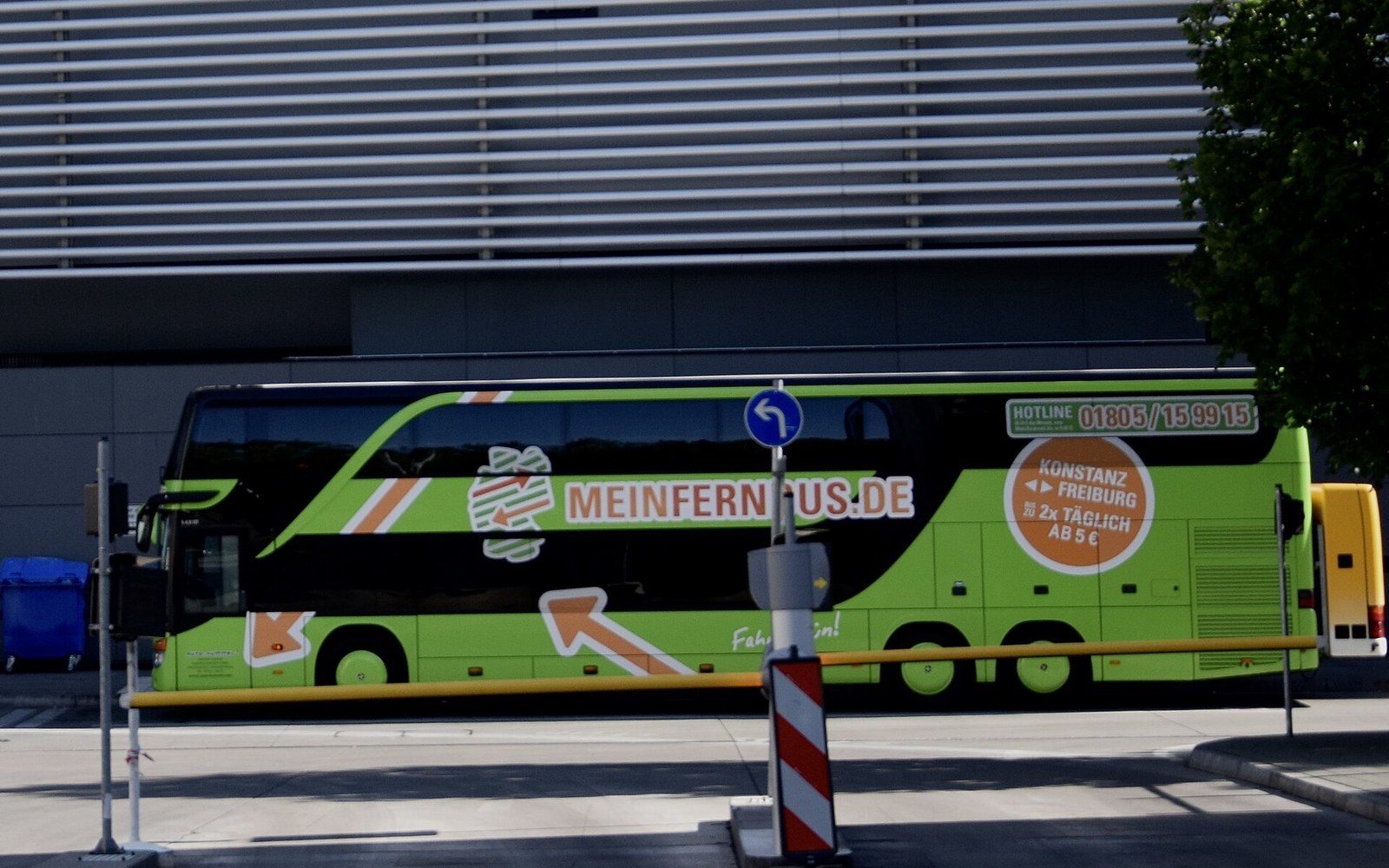
The competitor the law had excluded since 1961, in service on a corridor the carpool assumed it owned.
Photograph: Setra S 431 DT intercity coach, Munich central bus station · Wikimedia CommonsOn corridors with frequent, fast rail the shared car is competing on price alone, and on price alone it is fragile.