The detour nobody prices
The seat sold for fuel and tolls; the time it took to collect the passenger was free.
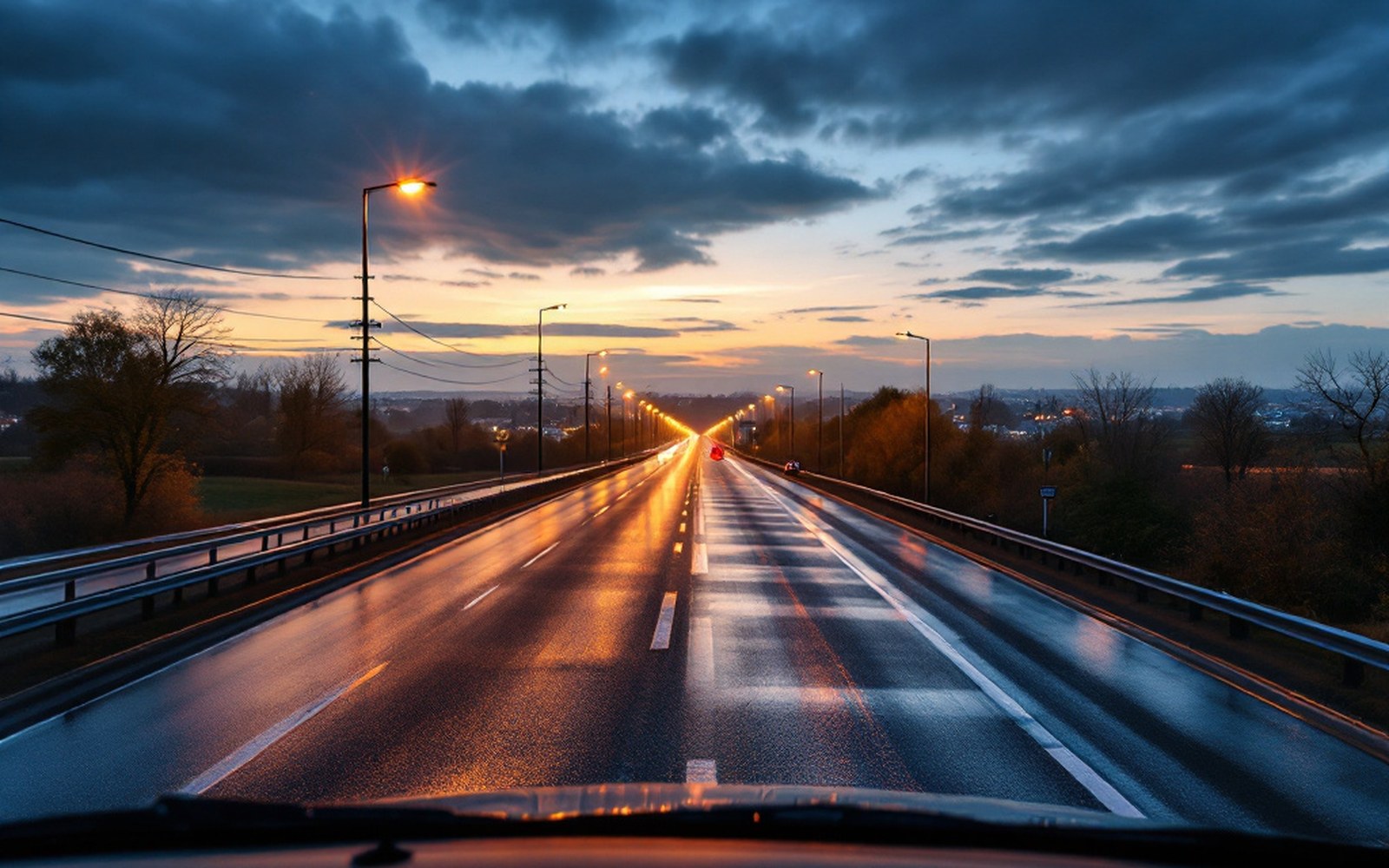
The pickup happens off the natural route. Everything the diversion costs is paid by the driver alone.
Photograph from the tripda.com picture kitThe invisible variable
The cost-sharing model prices a seat at a proportional share of fuel and road tolls — the consumable costs of the journey. What it does not price is the detour. Every pickup that pulls a driver off a motorway and into a city centre, every drop-off that adds fifteen minutes of suburban crawl, represents a cost that never appears in the arithmetic and is never split with the passenger.
The mechanism is straightforward. A driver travelling from Stuttgart to Frankfurt has a fixed route with a fixed fuel bill. The moment a passenger boards three kilometres off that route — at a train station, a park-and-ride, at home — the driver has absorbed a small but real cost: time, extra fuel, and wear, all uncompensated. At highway speeds, even a short detour carries a measurable fuel penalty, because urban driving burns fuel faster than steady cruising.
On a single trip this is noise. Across a platform with millions of journeys it is a systematic subsidy — one the driver pays invisibly, and one that platforms had little incentive to surface because it would have made the headline price look smaller relative to the true cost.
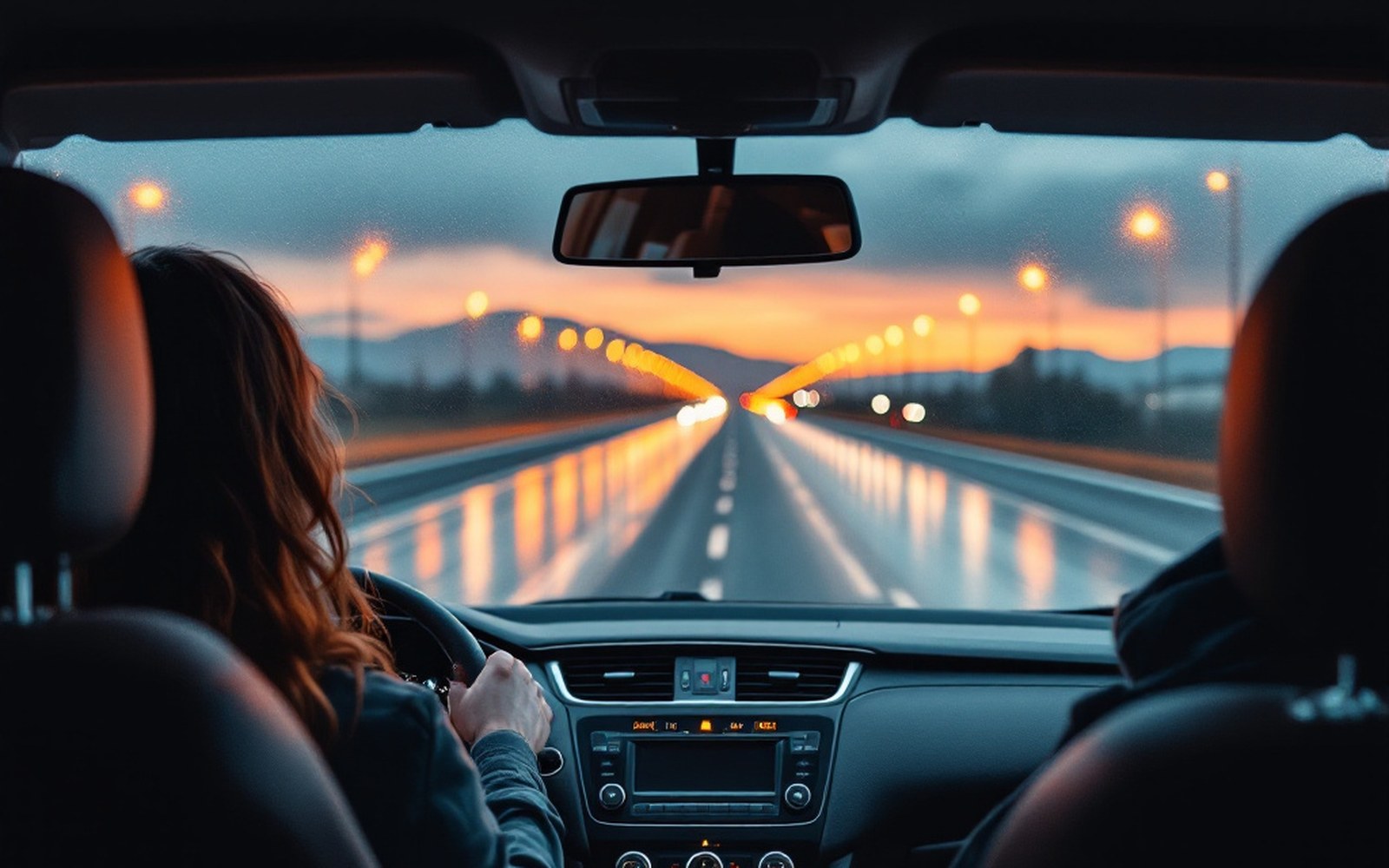
Two in the front, three places behind them. The occupancy average, seen from the seat that is being counted.
Photograph from the tripda.com picture kitBlaBlaCar, the French platform that became the dominant intercity carpooling marketplace in Europe, addressed pickup location as a product question rather than a pricing question: it encouraged meeting at recognisable, accessible points — motorway exits, major stations — partly to simplify coordination, partly to limit the scope of the detour problem without ever naming it as such. The detour cost was managed through convention, not through the fee structure.
What this means arithmetically is that occupancy rate calculations for carpooling understate the effective cost per seat. A car carrying three passengers who each required an off-route pickup is not equivalent to a car that collected three passengers at a single point on its natural corridor. The loaded seat count is the same; the real cost to the driver is not.
The missing variable matters most on markets where driving time has high opportunity cost — and least on long, rural corridors where the driver is going that direction regardless. It is not a fatal flaw in the model. It is simply the term that the arithmetic left out.
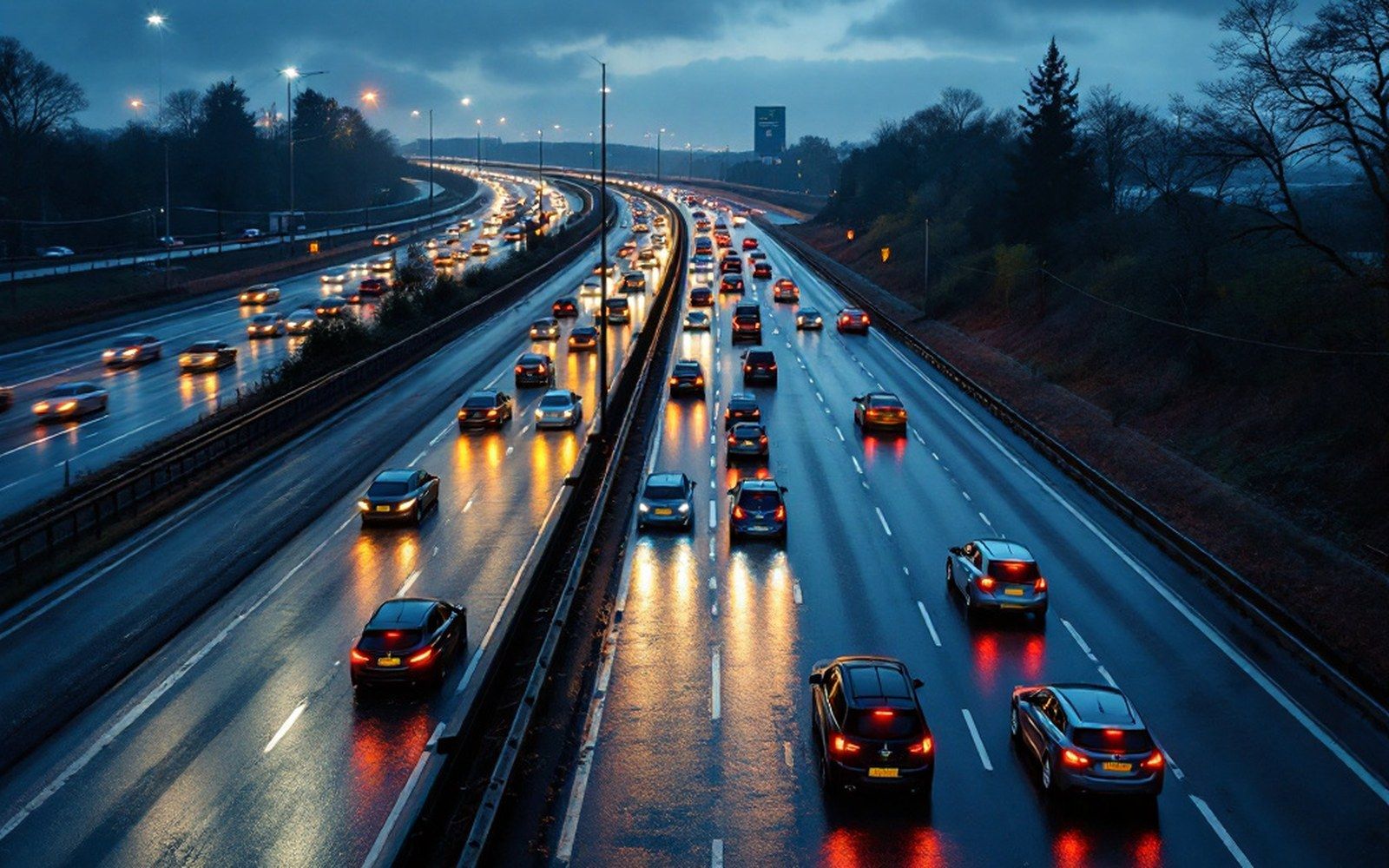
Most of the cars on this stretch are carrying one person, and every one of them is the supply side of the market.
Photograph from the tripda.com picture kitEvery pickup is a diversion, and the minutes it costs the driver are the hidden term in the arithmetic.