What a rating cannot carry
A reputation score assumes repeat players. Intercity carpooling keeps producing first-timers.

Reputation compounds through repetition. A long shared journey happens a handful of times a year.
Photograph from the tripda.com picture kitThe mechanics of a reputation system
A rating does real work in a dense marketplace. On a platform where participants transact dozens of times a year, a five-star average aggregates genuine signal: sample size is large, recency matters, and a bad actor cannot hide behind a thin profile for long. This is why reputation systems function well in urban ride-hailing, where a driver might complete several hundred trips in a month.
Intercity carpooling is a different frequency regime entirely. Most drivers who offer seats on a long corridor do so a handful of times a year — commuting in from another city on a regular contract, driving home for a holiday weekend, relocating once and never again. The result is that the profile a passenger inspects before accepting a seat may carry one rating, or two, or none at all. A five from a single reviewer is statistically indistinguishable from a five from fifty. The system looks the same in both cases; the underlying information content is not.
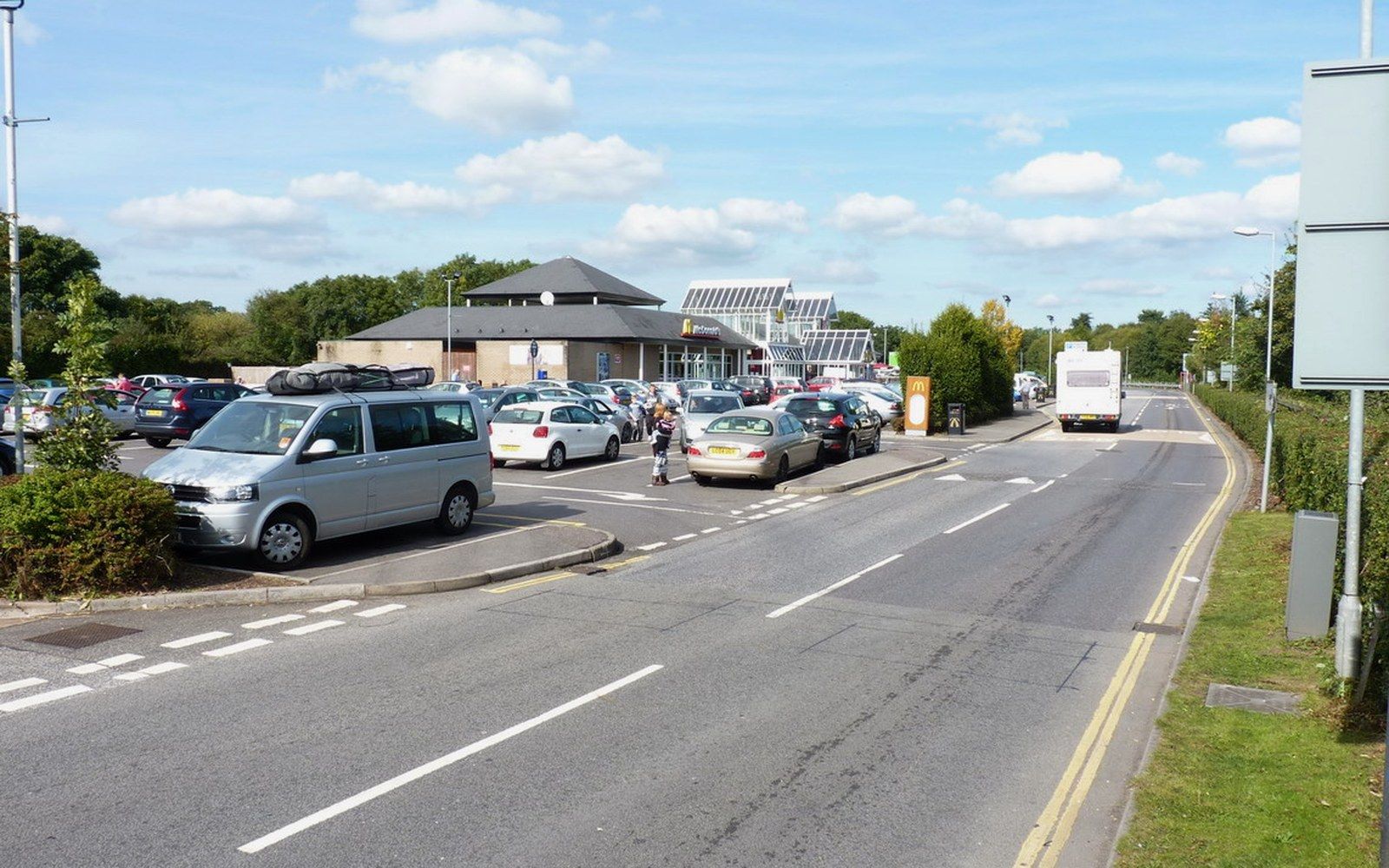
The category owns no infrastructure. It borrows this: a car park off a trunk road where two strangers agree to meet.
Photograph: Cullompton motorway service area · geograph.org.uk 3218604 · Wikimedia CommonsWhat the number is actually measuring
The deeper problem is what the rating captures even when it accumulates. Passengers tend to rate on the surface experience: punctuality at the pickup point, pleasantness of the conversation, cleanliness of the car. These matter, but they are not the variables a prospective passenger is most uncertain about before the trip. The rating compresses a complex prior into a single digit and then presents it with a confidence it cannot honestly carry.
BlaBlaCar, the French platform that became the category's reference operator, recognised this constraint and layered supplementary signals around the raw score: verified phone number, linked social account, stated preferences for conversation and smoking, percentage of trips confirmed versus cancelled. Each of those dimensions is an attempt to transmit information that a star rating cannot. The profile as a contract — stated preferences, trip history, confirmation rate — does more trust-work than the aggregate score sitting beside it.
The cancellation rate is the clearest example. A driver with a four-point-eight rating who cancels twenty percent of accepted bookings is a worse counterparty than a driver with four-point-five who cancels none. The rating buries the operationally important variable under a pleasantness average.
The thinness of a first trip
For a new user, the rating problem collapses entirely. A first-time driver has no history at all, which means the platform must supply credibility from somewhere else. The documented solutions are structural: identity verification, which creates accountability without performance history; the deposit-based booking flow, which makes non-performance costly; and the social graph link, which borrows trust from a network the passenger has already formed judgments about. Germany's and Brazil's Tripda deployments under Rocket Internet used the same toolkit, because the toolkit was not invented for a market — it was the answer to a category-level problem about sparse ratings.
None of these substitutes are equivalent to a reputation earned across many interactions. They are proxies, and proxies leak. A verified phone number confirms that someone controls a SIM card. A Facebook link confirms a social presence. Neither confirms that the driver will show up at the agreed time at the right motorway junction, which is the operative question.
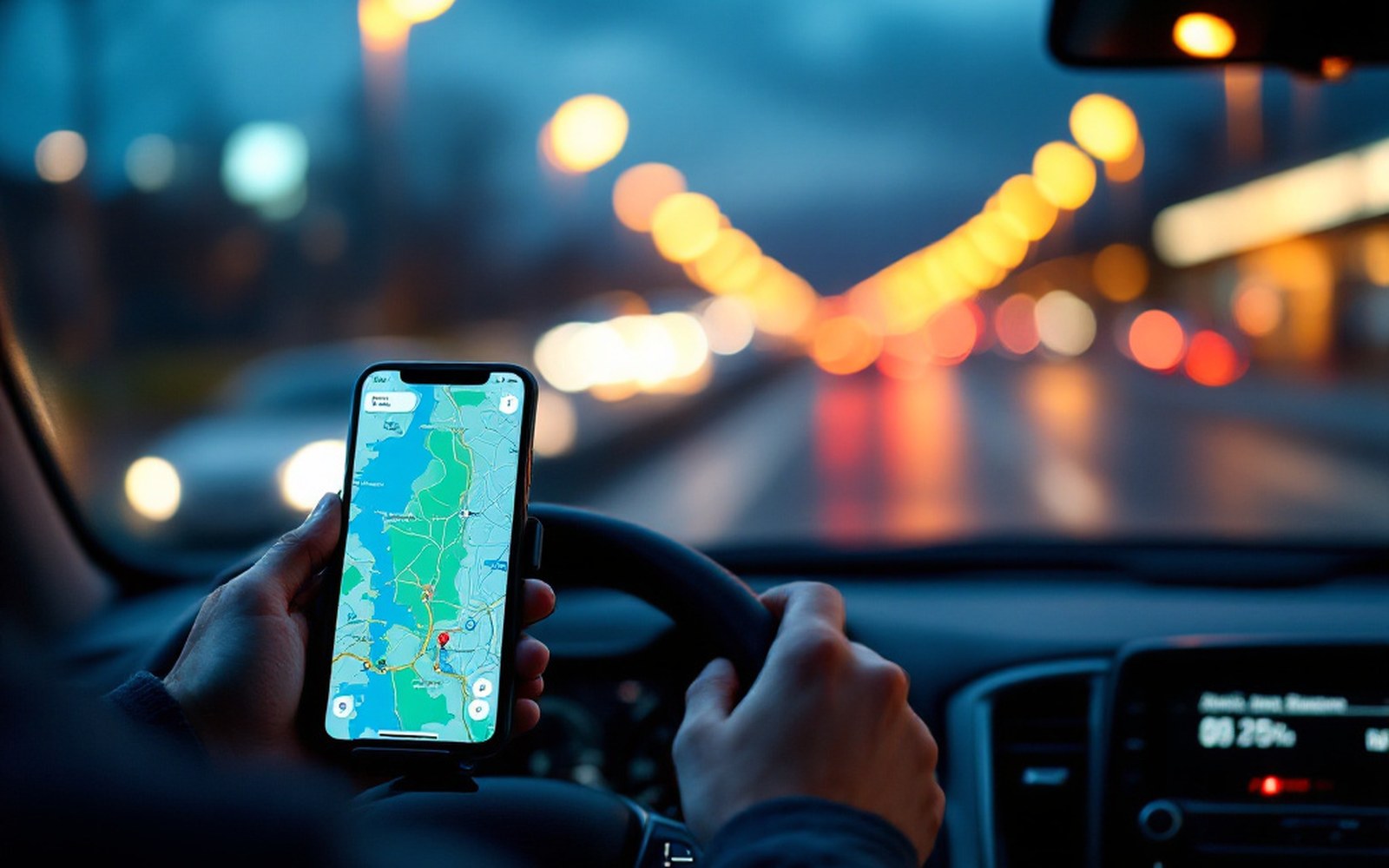
The match is settled before the engine starts. What the platform sold was not routing but recognition.
Photograph from the tripda.com picture kitWhat the system can and cannot guarantee
The honest description of a reputation system in intercity carpooling is that it provides a floor, not a signal. It removes the most obviously bad actors — the ones who collect multiple one-star reviews — but it cannot rank the rest of the field with any statistical confidence when trip frequency is low. A passenger using the rating to compare a four-point-six driver against a four-point-eight driver on next Saturday's corridor is reading precision into data that does not contain it.
The rating persists because removing it would be worse: a blank where a score used to be is more alarming than a thin score. But the platforms that handled trust most robustly treated the star as the last piece of the picture, not the first — surrounding it with verification layers, stated commitments and cancellation metrics that did the heavier analytical lifting the number itself could not.
Reputation systems work on repeat participation, and most people share a long journey a handful of times a year.